
Everyday Suede Shoe Care: Handling Rain, Spills, and Unexpected Water Damage
You didn’t buy suede because it’s easy to take care of. You bought it because nothing else looks like it, and you’...

Spring cleaning is mostly about the house – the windows, the baseboards, the cabinet above the refrigerator. But the closet deserves the same attention, and most people give it the least.
Pull your spring wardrobe out of storage, and you'll find a mix of items that look fine, need a quick wash, and should never go anywhere near your washing machine. The problem is telling them apart. Toss the wrong piece into the washing machine, and you can shrink a linen blazer, distort a silk blouse, or permanently set a storage stain into the fabric.
These spring cleaning laundry tips will help you sort through your stored clothes correctly: what to wash at home, what needs professional dry cleaning, and the garments that are better off going straight to Major Cleaners in Greenville, South Carolina, before you wear them again.
Before anything goes into the washing machine or gets dropped at the dry cleaner, spend 20 minutes going through the pile. It saves you from two very avoidable mistakes: washing something that needed dry cleaning, and dry cleaning something that was perfectly fine in a cold-water cycle.
A tag that says "dry clean only" on a linen jacket isn't a suggestion. Water and heat will alter the structure of the fabric in ways that can't be reversed. If the label is missing or faded, treat the piece as dry clean only until you know what you're dealing with.
A light stain from last season's salad dressing or a faint yellow ring at the collar can look invisible when you pack something away, and then oxidize over months into something noticeably set. Check collar edges, underarms, cuffs, and the front placket on white and light colored pieces. If you find a stain, don't put it into the dryer until the spot is gone. Dryer heat permanently bonds stains to fabric.
Hang each garment near a window or in a place with good airflow for a few hours. Cotton and linen absorb closet odors over months, and a lot of what smells musty coming out of storage doesn't actually need to be washed — it needs air. Once a piece airs out, you can make a clearer call on whether it needs a full wash, a dry cleaning run, or just a press.
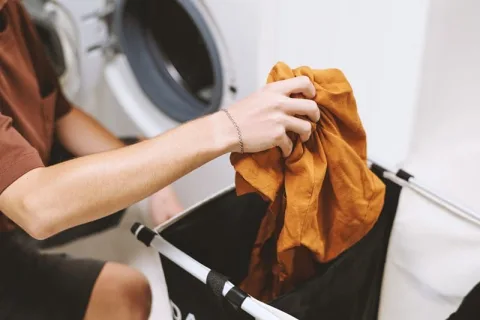
Machine washing is fine for most everyday spring pieces, as long as you know a few things even experienced home launderers get wrong.
These go into the machine. Cold water protects color and reduces shrinkage. Turn graphic tees inside out. Use a gentle detergent and skip the extra hot dry cycle. Medium heat or air dry keeps these pieces lasting longer through the season.
Casual linen shorts, simple linen shirts, and everyday linen tops can usually be washed at home in cold water on a gentle cycle. The mistake people make is the dryer – high heat shrinks linen fast. Air dry or tumble on the lowest heat setting, then smooth the piece by hand while still slightly damp. Structured linen pieces such as blazers and tailored pants are a different story entirely and belong with dry cleaning.
Polyester and poly-blend pieces handle machine washing well. Use cold water, normal cycle, low heat dry. The one exception: heavily embellished polyester pieces with beading, sequins, or decorative stitching should be hand-washed or dry cleaned to protect the details.
Check each stain before the piece goes into the dryer. If a stain is still visible after washing, even faintly, treat it again and rewash. Once it goes through a hot, dry cycle, it's set. No amount of rewashing will fully reverse it after that, and even professional dry cleaning will have a harder time. This is the single spring cleaning laundry tip that saves the most clothes every season.
Dry cleaning isn't for precious or difficult garments only. It's the right cleaning method for a specific set of fabrics and constructions where water and machine agitation cause more damage than they fix. Here's where the line is.
Silk is the fabric most commonly ruined by well-meaning home washing. Water weakens silk fibers, and agitation distorts the weave. A silk blouse that comes out of the washing machine can lose its sheen, shrink unevenly, or develop permanent texture changes that no amount of ironing will fix. Dry cleaning preserves the drape, luster, and structure that make silk worth wearing.
Structured jackets, such as linen, wool, cotton twill, or blended fabric, contain internal interfacing and padding that gives them their shape. Water dissolves the adhesives that hold together that structure. Put a blazer through a home wash cycle, and you'll get it back clean but shapeless, with a rippled front and shoulders that no longer sit right. Dry cleaning cleans the fabric without touching the construction underneath.
Even lightweight spring wool pieces and cashmere cardigans that come out of winter storage belong in dry cleaning, not the washing machine. Wool felts under agitation and warm water. What goes in as a fitted cardigan can come out two sizes smaller. Dry cleaning handles wool without the heat or agitation that causes irreversible shrinkage.
Formal dresses, lined skirts, embellished tops, and occasion wear almost universally require dry cleaning. Beading, sequins, and decorative stitching can dissolve, break, or detach in a wash cycle. Lining materials shrink at different rates than outer fabrics, causing bunching and distortion. When in doubt with any formal piece, dry cleaning is the default.
If you find a yellowed collar or a set-in stain from last season during your inspection, home washing is unlikely to remove it at this stage. Professional dry cleaning uses targeted solvents that identify and treat specific stain compositions (e.g., oil, protein, tannin, dye) in ways a home wash cycle simply isn't designed to clean. Take these pieces to Major Cleaners first, before attempting to wash them.
Use this as your sorting guide when pulling your spring wardrobe out of storage.
| Garment | Home Wash | Dry Cleaning |
|---|---|---|
| Cotton tees and casual shirts | Cold water, gentle cycle | |
| Casual linen shirts and shorts | Cold water, air dry | Structured linen pieces only |
| Polyester blends (everyday) | Cold water, normal cycle | |
| Silk blouses and dresses | Always | |
| Blazers and structured jackets | Always | |
| Wool and cashmere pieces | Always | |
| Formal and occasion wear | Always | |
| Embellished tops and dresses | Recommended | |
| Lined skirts and trousers | Recommended | |
| Anything tagged dry clean only | No exceptions | |
| Pieces with set storage stains | Before washing |
Every wardrobe has pieces home washing handles fine, and pieces that genuinely need a professional. The risk with spring cleaning is that everything comes out of storage at once, and rushing the sorting process leads to washing items that should have been dry cleaned.
At Major Cleaners in Greenville, South Carolina, we've been seeing this exact situation since 1950. Silk that came out of the machine wrong. Blazers that lost their shape after one hot wash cycle. Storage stains someone tried to remove at home that are now permanently set.
As a family-owned dry cleaning business with more than 70 years of experience in Greenville, we see these garments regularly, and most of the damage was avoidable.
We handle all fill types and fabric constructions, from everyday cotton to the most delicate structured pieces. Before cleaning, we inspect every garment. We check for stains, fabric stress points, and construction details that affect how the piece should be cleaned. You get it back looking the way it was meant to look, not just surface clean.
We also offer FREE Pickup and Delivery Service across Greenville, so working through your spring wardrobe doesn't mean adding a trip across town. Schedule a FREE pickup, set the dry clean pile by the door, and it comes back pressed and ready to wear.
Schedule your FREE pickup today:
Online Scheduling: https://brashierpolkcleaners.smrtapp.com/custx/login
Phone: 864-675-9499
Location: Greenville, South Carolina
Store Hours
Monday through Friday: 7:00 AM to 6:00 PM
Saturday: 8:30 AM to 2:00 PM
Sunday: Closed
Silk, wool, cashmere, structured blazers, lined trousers, formalwear, embellished pieces, and anything tagged dry clean only. When in doubt after finding a set storage stain, take the piece to Major Cleaners before attempting to wash it at home.
Once at the end of each season, before storing, and once when you bring them back out in spring. Dry cleaning before storage removes the invisible oils and residue that oxidize into set stains over months. Coming back out, dry cleaning refreshes the fabric and removes anything that accumulated during storage.
Casual linen pieces — simple shirts, shorts, everyday tops — yes, on cold water with a gentle cycle and an air dry. Structured linen pieces, such as blazers, tailored linen trousers, or lined linen dresses, should be dry cleaned. The lining shrinks at a different rate than the linen outer, and the internal structure doesn't survive a home wash intact.
Air out pieces before deciding anything. Check every garment for storage stains at the collar, underarms, and cuffs. Sort strictly by fabric type, not by how the piece looks. Check the care label before anything goes into the washing machine. And always inspect for remaining stains before the dryer. One load through a hot dryer with an untreated stain can set it permanently.

Designed by Cleaner Marketing | 2026 © Copyright Major Cleaners