Putting a price on a used wedding dress means pricing something genuinely hard to value. Wedding dress preservation isn't the goal for a seller, getting the price the dress actually deserves is the objective. Silhouettes, brand, and era all matter, but there is one factor you can actually control before you list: whether or not the dress has been professionally cleaned.
In a used bridal market where almost everything else is a judgment call, a clean, documented dress removes the single biggest hesitation a buyer has before she makes an offer. This guide breaks down what cleaning genuinely fixes, what it honestly cannot touch, and how to use it correctly so your listing earns the price your dress deserves.
What a Buyer Is Actually Afraid Of
A buyer scrolling through resale listings isn't mainly worried about your price. She's worried about one thing, whether or not the dress has been cleaned since your wedding day. A dress left unwashed for a year is a worse purchase than one cared for right away, even if both look identical in photos.
She can't inspect the fabric or check the seams before buying, so she fills that gap with suspicion, and it shows up as a lower offer or no offer at all. Removing that fear with proof is what actually sells the dress.
The Question Every Buyer Asks Before Making an Offer
Ask any seller in a bridal resale group, and they'll tell you the first message is rarely about price. It's almost always if it’s been cleaned, and if you have proof. Buyers who skip that question tend to lowball instead, quietly pricing in the risk themselves. Sellers who can answer right away, with a date and a receipt, get taken seriously from the first reply.
The Marks a Buyer Can't See Still Affect Your Listing
Some of the most damaging marks are invisible on the wedding day itself. Champagne, perspiration, and food residue sit in the fibers without a trace, then oxidize over the following months into a yellow or brown stain.
A dress photographed right after the wedding can look flawless and still develop a mark by the time a buyer receives it. Experienced resale buyers recognize this pattern, which is part of why cleaning proof carries so much weight. For more on how staining and stiffness develop when a dress is never preserved, see our guide to wedding dress preservation.
Which Stains Are Most Likely to Turn Up Later
A few culprits account for most delayed staining on a dress that looked clean at the time:
- Champagne and sugary drinks, which oxidize into a yellow-brown ring along the hem.
- Perspiration around the underarms and bodice, which darkens with time and heat exposure.
- Foundation and other makeup near the neckline, which can transfer and set during the reception.
- Food oils from a seated dinner, which spread and deepen if left untreated.
None of these is visible in a photo taken the week after the wedding. They become visible on their own schedule, usually long after a seller has already listed the dress as spotless.
What Cleaning Fixes, and What It Honestly Doesn't
Professional cleaning resolves the residue described above, plus general soiling from a full day of wear and travel. It won't change a dated silhouette, revive a style out of demand, or repair damage that's progressed past surface soiling. If one of those applies to your dress, don't expect a clean tag to move the price much. Being upfront about that limit is what makes the rest of this advice worth trusting.
Red Flags No Amount of Cleaning Will Solve
Buyers and consignors both watch for a specific set of issues that cleaning cannot mask:
- Yellowing that has set into the pleats or lining from prior improper storage.
- Boning or structural wire that has worked through the fabric.
- Beading or lace appliques that have come loose or gone missing.
- Torn seams or stress tears along the zipper and bodice.
If any of these apply to your dress, price it accordingly before you list it. A disclosed flaw rarely kills a sale. A discovered one does, and it usually costs more than the price adjustment would have.
Proof Matters as Much as the Clean Itself
A buyer can't see or smell your dress through a screen, so documentation does work the clean itself can't. A dated receipt paired with before-and-after photos turns an invisible fact into something she can verify at a glance instead of taking your word for it. That's often the difference between offers within days and a listing that sits ignored for weeks.
What to Keep and Where to Put It in Your Listing
Gather these before you write a single word of your listing description:
- The dated receipt or invoice from your cleaner.
- Any before photos you took before cleaning, if available.
- A clear photo of the dress after cleaning, taken in natural light.
Mention the cleaning date directly in your listing text, not buried in a photo caption where a scrolling buyer might miss it. A line such as “professionally cleaned in June 2026, receipt available on request” answers the first question before anyone has to ask it.
Clean It Before You Photograph It, Not After an Offer Comes In
This is the step sellers get backwards most often. Photographing the dress first and cleaning it later, once a buyer's interested, wastes your strongest asset before you even need it.
Photos taken after cleaning are what attract serious offers, not something to hold in reserve. A dress that photographs crisp and bright from the start gets more views and better offers than one that looks fine but remains unverified.
How Soon After the Wedding to Get It Done
Timing matters more than most sellers realize. The ideal window for getting it cleaned is within a few weeks of the wedding, before residue has time to oxidize into a visible stain. If you are only now deciding to sell a dress that has sat for months or years, get it cleaned before you do anything else with the listing. Waiting until a buyer is already interested only adds delay to a sale that could otherwise be ready to close within days.
What to Say in Your Listing
Selling a wedding dress successfully comes down to specific, practical listing language. Say plainly that the dress was professionally cleaned and roughly when. Vague language such as “in great condition” reads as a dodge to a buyer who has already scrolled past dozens of listings that say the same thing with nothing to back it up.
Disclose any remaining flaw honestly rather than letting a buyer discover it after the sale. A small flaw priced fairly sells faster and closes cleaner than a hidden flaw that ends in a return request or a drawn-out dispute.
Listing Language That Builds Buyer Trust
A few lines you can adapt directly:
- Professionally cleaned in month, year. Receipt available on request.
- One small mark near the hem, disclosed and priced accordingly. See photo four.
- No alterations beyond the original hem. Cleaned and stored flat since.
Specific, factual language like this consistently outperforms generic praise, because it answers the exact question a buyer is already asking before she has to type it out.
Selling Your Dress? Let Major Cleaners Protect Its Value First
Every week your dress sits untouched, it loses a little more of what makes it sellable. The stains you can't see yet are already working against your asking price.
At Major Cleaners, we've specialized in wedding dresses since 2020 as a proud member of the International Association of Wedding Gown Specialists. Our MuseumCare process gently dissolves stains without harsh chemicals, so your dress comes back ready to photograph and list with proof in hand.
We offer wedding dress cleaning and preservation for exactly this situation: a dress about to be sold, not stored. We even plant a tree for every preservation, so the next chapter of your dress starts on a positive note.
Bring in your dress and let us handle the part that actually moves the price.
Main Line:(864) 675 9499
Secondary: (864) 528 9241
Email: info@majorcleaners.com
You probably think of your dry cleaner as the place for suits and silk blouses, and nothing else. That's a genuinely narrow read on what the service actually does. The actual process, solvent or specialized wet cleaning, was never built around clothing specifically. It was built around fabric a home washer can't handle safely – too delicate, too structured, or simply too large.
That distinction covers considerably more of your house than you'd expect, and here's exactly what.
Household Bedding: Comforters, Duvets, Quilts, and Pillows
Bedding takes a beating that most people underestimate. Body oils, dust mites, and everyday wear settle deep into the fill, not just the surface, and a home wash rarely reaches it.
Professional cleaners regularly handle:
- Comforters and duvets, including down-filled and synthetic-fill versions.
- Quilts, from everyday cotton to hand-stitched pieces.
- Pillows, both down and synthetic.
- Mattress covers and protectors.
- Heavy blankets, including wool and weighted styles.
Down items need particular care. Cleaned improperly, the fill clumps and loses its loft permanently. A professional cleaner uses methods that protect the structure of the down while still fully cleaning it.
Typical turnaround: 2 to 4 days for most bedding, longer for oversized or heavily soiled items.
How Often Bedding Actually Needs Professional Cleaning
- Comforters and duvets: Every 6 months, or sooner if allergies are a concern.
- Pillows: Every 6 to 12 months.
- Quilts and decorative blankets: Once a year, or after any spill or stain.
- Mattress covers: Every 3 to 6 months.
Waiting longer than a year lets dust mites and oils build up to a point where cleaning takes more effort, and the fabric shows more wear.
Why Home Washers Under 4.5 Cubic Feet Can't Properly Handle King Bedding
Most residential washers max out around 3.5 to 4.5 cubic feet. A king comforter fills that drum with no room left for water or detergent to circulate, so it gets agitated in place instead of actually washed.
Three specific problems show up when oversized bedding goes into an undersized machine:
- Uneven saturation. Soil and oils stay put at the center, where detergent can't reach.
- Fill displacement. Down and synthetic fill clump under the pressure, often permanently.
- Seam and baffle stress. Stitching tears under the twisting force for which it wasn't built.
A comforter often looks fine at first, then shows the real problem weeks later: cold or damp spots where fill has clumped, a musty smell from a center that never fully dried, seams that loosen more with each wash. None of it reverses with a second wash.
Window Treatments: Curtains, Drapes, and Sheer Panels
Curtains hang in place for months or years at a time, which means they constantly filter whatever passes through the air in that room. Most people vacuum them occasionally and call it done.
Cleaners regularly handle full-length drapes including lined and interlined versions, sheer panels, valances and cornices, blackout curtains, and curtains with pleated or structured headings.
Construction matters here. Interlined drapes, weighted hems, and detailed pleating are often built specifically to be dry-clean-only, since washing and drying at home can shrink the lining unevenly or distort the pleats permanently.
Typical turnaround: 3 to 5 days per set, depending on size and construction.
Signs Your Curtains Are Overdue for Cleaning
- The fabric looks a shade duller than it did when it was new.
- Sneezing or stuffiness increases specifically in the room with the curtains.
- Sunlight passing through shows visible dust suspended in the fabric.
- The hem or lining feels stiffer than the rest of the panel.
The Dust and Light Airborne Pollutants Vacuuming Doesn't Reach
Vacuuming curtains removes surface dust. It does very little for what's actually accumulated inside the weave over months of exposure to open windows, HVAC circulation, and everyday household air.
Curtains and drapes collect fine particulate matter well below what a vacuum nozzle can lift, including: pollen and outdoor allergens near frequently opened windows, pet dander that clings to fabric fibers differently than hard surfaces, and cooking residue in open floor plans.
Professional cleaning penetrates the full weave of the fabric rather than lifting particles from the surface only, which is why it addresses buildup that vacuuming physically can't reach. For households managing allergies, asthma, or a new baby, cleaning curtains closer to every 3 to 6 months rather than annually reduces one more source of airborne irritants in the rooms in which people spend the most time.
Upholstery Slipcovers, Table Linens, and Decorative Throws
Fabric that covers furniture or dresses a table sees just as much use as clothing, sometimes more, but rarely receives the same cleaning attention.
This category includes sofa and chair slipcovers, dining chair covers, table linens for special occasions including tablecloths and cloth napkins, decorative throws and accent blankets, and bed skirts and decorative shams.
Many of these items have trims, tufting, or embellishments that a washing machine will snag, fray, or flatten. Holiday table linens often carry set-in stains – wine, sauce, and wax – that respond far better to professional treatment than a standard wash.
Typical turnaround: 2 to 4 days, longer for full slipcover sets.
The Stain Timing Problem With Table Linens
In the case of holiday and event linens, stains often sit for days or weeks before they are addressed, since items are stored straight after events instead of being cleaned right away. By the time it comes back out the following year, the stain has fully set.
Take in stained linens within a few days of the event, point out what caused the stain if you know it, and store linens only after they've been fully cleaned, never with a stain still present.
Specialty Accessories: Leather, Suede, Ties, Hats, and Scarves
Accessories tend to get overlooked because they're small, but small doesn't mean simple. Several of these categories require handling that has nothing in common with standard fabric cleaning.
Commonly cleaned specialty items include leather jackets, bags, gloves, suede accessories needing dry treatment methods entirely different from leather, neckties and bow ties where the interior interfacing can't be wet-cleaned without losing its shape, formal hats including felt and structured styles, and scarves from silk to wool.
Leather and suede each respond to different products and techniques. Treating suede like leather, or vice versa, can permanently damage the texture.
Why Ties Are Harder to Clean Than They Look
A tie looks like a simple strip of fabric, but it has three layers: outer shell, lining, and a structured interfacing that holds its shape. Hand washing shrinks the interfacing faster than the shell, leaving a tie that puckers no matter how it's pressed. Professional cleaning treats each layer separately, the only way to keep the shape intact.
Sentimental and Heirloom Textiles That Belong Only With a Professional
Some items carry more than fabric value: a christening gown passed through three generations, a hand-embroidered tablecloth, a quilt stitched decades ago. These aren't pieces on which to experiment.
Museum conservators treat aging fabric with methods that stabilize the fiber, not just clean it, since old textiles react unpredictably to standard detergents and agitation. A cleaner experienced with heirlooms applies that same caution.
Items in this category include christening gowns and baptismal garments, hand-me-down quilts, embroidered or lace-trimmed linens, vintage clothing and antique textiles, and wedding dresses kept for sentimental or future use.
What Makes Aged Fabric Different to Clean
Fabric doesn't age uniformly. A 1960s quilt may have batting that's brittle in some spots and soft in others, or dyes grown more reactive to water and heat over time. A cleaner working with aged textiles adjusts the approach piece by piece, which is why these items take longer and cost more.
Christening Gowns, Inherited Quilts, and Vintage Fabrics
These specific items deserve their own note because they combine two risk factors: sentimental irreplaceability and fragile, aged material.
- Christening gowns often have both delicate lace and a lining that ages differently than the outer fabric. Ask specifically if the cleaner has handled infant garments with their construction before.
- Inherited quilts may have batting that has shifted or thinned with age. Mention any known repairs or weak spots before cleaning begins.
- Vintage fabrics in general benefit from a spot test on an inconspicuous area first, something a cleaner experienced with older textiles will typically do without being asked.
Typical turnaround: 5 to 10 days for heirloom items, since these are handled individually rather than in batch cycles.
What to Ask Before You Drop Off Something
- Have you cleaned this type of item before? A cleaner who's handled leather, down bedding, or vintage lace regularly will say so directly.
- What's the expected turnaround? Oversized and specialty items take longer than standard garments.
- What condition should I expect it back in? For heirloom or already-fragile items, ask what the cleaner anticipates given the item's current state.
- Does the item need a repair first? Loose seams, weak batting, or fraying trim are worth flagging before cleaning rather than after.
Items Worth a Phone Call Before You Even Take Them In
For a few categories, it's worth calling ahead rather than showing up unannounced: anything with a known stain older than a few months, leather or suede with visible cracking or dryness, any item where you're not sure it's washable at all, and heirloom pieces with no known cleaning history.
How to Choose a Cleaner Who Actually Handles More Than Everyday Clothing
Not every cleaner is set up for the full range in this guide. Some specialize in garments only and outsource or decline anything larger or more delicate.
- Ask about specific categories, such as king bedding or leather, not just if they handle more than clothes.
- Look for equipment sized for oversized items. Shops that regularly clean comforters and drapes have the machines to match.
- Notice how they talk about heirloom pieces. Real experience shows in questions about age and condition before a quote.
- Watch for flagged issues. A shop that points out a weak seam up front is being straightforward, not making excuses.
A cleaner confident across these categories says so without hesitation. It's routine work for them.
Bring in the Item You Weren't Sure We Could Clean – Visit Major Cleaners
At Major Cleaners, we've spent over 70 years learning exactly the items with which Greenville trusts us beyond the everyday suit or blouse. Comforters that don't fit in a home washer, drapes overdue for their annual freshening, heirloom pieces that deserve a specialist's hands – we handle all of it with the same care that's kept our family business running since 1950.
If you've been searching for the best dry cleaning in Greenville, South Carolina, this is where that search ends. Drop off the item, give us a call to describe what you're bringing in, or reach out for a quote. We're ready when you are.
Phone: (864) 675 9499
Email: info@majorcleaners.com
Short answer: No, professional dry cleaning does not shrink your clothes. The process uses chemical solvent, not water, so the thing that shrinks fabric in your washing machine isn't present. Customers send wool coats, silk blouses, and cashmere sweaters to the dry cleaner every week without any issues, and there's a clear reason why.
This article covers exactly what the process does to delicate fabrics, what to check before you drop off anything, and why the dry cleaner is often the safest place those pieces can go.
Why Standard Dry Cleaning Doesn't Cause Shrinkage
Shrinkage occurs when heat, water, and agitation act on fabric fibers. Dry cleaning removes all three. Instead of water, professional cleaners use a liquid solvent that dissolves oils, odors, and stains without soaking the fiber itself.
No water. No swelling. No shrinkage.
What CAN Cause Problems at a Dry Cleaner
Professional dry cleaning is safe when done correctly, but it's worth knowing what "correctly" looks like:
- Excessive heat during pressing/finishing can stress delicate fibers if the cleaner doesn't calibrate the temperature by fabric type
- Improper solvent concentration can weaken certain finishes or embellishments
- Machine malfunction or inattention at lower-quality facilities can lead to damage that gets blamed on the process itself
The takeaway: dry cleaning doesn't shrink clothes. A careless cleaner can damage them. Those are two different problems, and knowing the difference helps you choose the right place to go.
Is Dry Cleaning Safe for Wool?
Yes, and it's actually the safer choice compared to washing at home. Wool has tiny scales on each fiber. When those scales come in contact with water, heat, and movement, they lock together permanently.
That's not just shrinkage; it's a structural change called felting. Dry cleaning avoids that combination entirely, which is exactly why wool coats, suits, and sweaters have been dry cleaned for decades without issue.
Pilling: The One Wool Issue Dry Cleaning Can't Fix
This is worth clarifying because it causes confusion at pickup: Pilling comes from friction during wear, not from how you clean the garment. Those small fiber balls on your sleeves were there before your wool sweater went in.
Dry cleaning will clean the garment, not reverse wear patterns. If you drop off a pilled sweater expecting it to come back smooth, that expectation gap will feel like damage. It isn't.
Silk and Dry Cleaning: When It's the Right Choice
Silk is one of the most water-sensitive fabrics in everyday wardrobes. When silk gets soaked, the protein structure that gives it that smooth, luminous finish starts to break down. The result:
- Permanent water spots that don't wash out
- Dye bleeding or color shift
- Weakened fibers that snag or tear more easily
Dry cleaning skips water entirely, which is why it's the recommended cleaning method for most silk garments. A silk blouse that comes back looking dull or spotted from a home wash is often a preventable problem, not a fixable issue.
What to Tell Your Dry Cleaner About Silk at Drop-Off
Not all silk is the same fabric. Charmeuse, dupioni, and crepe de chine each handle heat and solvent differently.
When you drop off a silk piece, mention:
- The specific type of silk, if you know it
- Any pre-existing discoloration or water marks
- Whether the garment has a lining or embellishments that might react differently
A good cleaner will ask. But providing this information up front helps them handle the garment with the right approach from the start, not guess at it.
Cashmere: How Dry Cleaning Preserves What Home Washing Destroys
This is where the stakes get highest. Cashmere is expensive, soft, and structurally fragile in ways most people don't realize until it's too late.
Here's what happens in a washing machine, even on the delicate cycle:
- Cashmere fibers have microscopic scales, similar to wool. Under heat, moisture, and agitation, those scales mesh together permanently. This process, called felting, can shrink a cashmere sweater by 30 to 50 percent in a single wash. That change is irreversible.
- A $300 sweater can come out looking like something a child would wear. And there's nothing a dry cleaner can do to undo it afterwards.
- Dry cleaning avoids the heat-water-agitation combination entirely. That's why it's the standard recommendation for cashmere, not a luxury precaution.
How Dry Cleaning Preserves the Softness of Cashmere Over Time
Dry cleaning doesn't just prevent shrinkage. It protects the lanolin that gives cashmere its characteristic softness.
- Home washing, even with gentle detergent, strips lanolin from the fiber over multiple washes
- Dry cleaning uses a solvent that cleans without stripping the natural oils
A cashmere sweater that's been dry cleaned regularly for five years will feel noticeably better than one that's been hand-washed. That softness isn't just texture; it's the fiber's integrity. Protect it.
What to Check Before Dropping Off Any Delicate Garment
You don't need to know everything about fabric science before you walk in. You just need a few things.
Read the Care Label First
| Label Says | What It Usually Means |
|---|---|
| Dry Clean Only | Professional dry cleaning is the designated method. Straightforward. |
| Dry Clean (without "only") | Professional dry cleaning is recommended, but some garments can also be professionally wet-cleaned. Ask your cleaner. |
| Hand Wash | Not a dry cleaning candidate. Requires specific handling. |
| No label / missing label | Flag this at drop-off. A good cleaner will inspect the fabric and advise. |
Professional dry cleaning is the designated method. Straightforward.
Professional dry cleaning is recommended, but some garments can also be professionally wet-cleaned. Ask your cleaner.
Not a dry cleaning candidate. Requires specific handling.
Flag this at drop-off. A good cleaner will inspect the fabric and advise.
The care label is the starting point. It's not always the full picture, but it tells you what the manufacturer tested and approved.
Tell Your Cleaner About Any Issues at Drop-Off
A quality dry cleaner will inspect every garment before it goes into cleaning. But you'll get better results if you mention:
- Known stains, especially older or set-in
- Loose buttons, weakened seams, or existing tears
- Areas of discoloration or previous water damage
- Any information about the fabric type if the label is missing
Bring In the Pieces You've Been Afraid to Wash – Major Cleaners Knows Exactly How to Handle Them
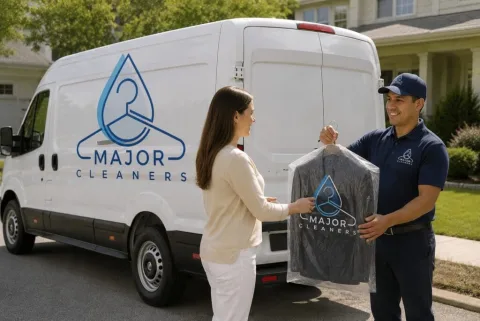
Wool, silk, and cashmere cost too much to risk on a home wash. The difference between a garment that lasts a decade and one that's ruined often comes down to one decision: who you trust to clean it.
We've been making that decision easy since 1950. Major Cleaners is a family-owned dry cleaning business serving Greenville, Mauldin, and Upstate South Carolina, and in over 70 years, we've handled every fabric type on this list and then some. When your wool coat or cashmere sweater comes through our door, it's inspected before it's touched and cleaned with the correct method designed for the fabric.
Can't make it in? We'll come to you. Our FREE Pickup and Delivery Service means your delicates receive professional care without you rearranging your day to drop them off.
📍 Address: Mauldin and Upstate South Carolina
📞 Phone: (864) 675-9499
📧 Email: info@majorcleaners.com
🕐 Store Hours: Monday – Friday: 7:00 AM – 6:00 PM Saturday: 8:30 AM – 2:00 PM Sunday: Closed
FREQUENTLY ASK QUESTIONS
1. Does dry cleaning shrink clothes?
No. Professional dry cleaning uses solvent instead of water, which removes the primary cause of fabric shrinkage. When done correctly, dry cleaning does not shrink wool, silk, cashmere, or other delicate fabrics.
2. Is dry cleaning safe for delicate fabrics such as wool, silk, and cashmere?
Yes. These fabrics are actually better suited to dry cleaning than home washing. Water, heat, and agitation damage natural fiber structures. Dry cleaning avoids all three.
3. What causes shrinkage in dry cleaning?
Shrinkage from dry cleaning is typically caused by equipment malfunction, excessive pressing heat, or improper solvent use at lower-quality facilities, not by the dry cleaning process itself.
4. Can cashmere be dry cleaned?
Yes, and it's the recommended method. Cashmere can shrink 30 to 50 percent in a single home wash due to a process called felting. Dry cleaning prevents this entirely.