
Everyday Suede Shoe Care: Handling Rain, Spills, and Unexpected Water Damage
You didn’t buy suede because it’s easy to take care of. You bought it because nothing else looks like it, and you’...

You open the box or unzip the bag from the bridal shop, and something is off. The ivory you remember is now a patchy yellow. You notice a brownish spot near the hem that wasn't there. The fabric, which once draped softly, feels stiff in your hands.
If you're pulling a stored dress out of an attic or closet, this discovery is more common than you might think. Obviously, this isn't the result of carelessness. It's a chemical reaction. Fabric, time, and storage conditions interact in predictable ways, and without professional wedding dress preservation, these changes are nearly inevitable.
The five damages below explain exactly what happened to your dress and what can still be done about each.
This is the most common complaint, and the most confusing, because it seems to happen even to dresses that were stored carefully. The short answer to why wedding dresses turn yellow over time is oxidation, but the full picture is worth understanding.
Two separate processes cause yellowing, and they often happen simultaneously:
If you see streaks or lines of yellow while other areas remain lighter, here's why:
Fabric stored in a folded position yellows faster at the crease points. Fibers under stress at fold edges have slightly higher oxygen exposure and degrade more quickly. The pattern of discoloration often maps directly to how the dress was folded. Lighter in some areas, noticeably yellow in others.
This is one of the clearest signs of long-term unpreserved storage, and it directly answers what affects wedding dress longevity: how it was stored matters as much as how long.
This one catches people off guard. The dress looked clean when it went into storage. It may have even been inspected the morning after the wedding. And yet, months or years later, brown spots appear seemingly from nowhere.
You didn't miss the stain. It didn't exist yet when you stored the dress.
Sugar based stains from champagne, cake frosting, juice, and sparkling cider are often completely colorless when fresh. You genuinely cannot see them the day after the wedding. As they oxidize during storage, they turn brown or tan.
This is one of the most important things to understand about what affects wedding dress longevity: a dress that looked pristine when it went into storage may not have actually been clean. The stain simply hadn't developed into a visible form yet. Professional wedding dress preservation includes cleaning that targets these invisible residues before they have a chance to oxidize, which is exactly why timing matters.
| How Long the Stains Have Been Setting | What's Typically Possible |
|---|---|
| Less than 1 to 2 years | Professional cleaning can often significantly reduce or fully eliminate the spots. |
| 2 to 5 years | Noticeable improvement is usually achievable, though some faint shadowing may remain. |
| 5+ years | Full removal may not be possible, but professional treatment can still lighten and improve the appearance considerably. |
Outcomes vary depending on fabric type and the specific substance that caused the stain. But improvement is almost always possible, even on older spots. A professional assessment will tell you specifically what's achievable for your dress. Waiting longer only makes it harder.
It doesn't look like "damage" at first. It looks like the dress just needs to be pressed or steamed. But crease lines from years of folded storage can be more than cosmetic, depending on the fabric.
Fabric stored in the same folded position for years gradually takes on that shape as fibers relax into the crease. The longer the fold holds, the more the fibers settle. Where your dress falls on the recovery spectrum depends on what it's made of.
Many brides store their dresses in the dry cleaner's bag from the bridal shop. It feels protective. For long-term storage, it isn't.
Acid-free boxes with breathable tissue are what professional wedding dress preservation actually uses. Plastic is one of the worst long-term storage materials for fabric, even when it seems like it's keeping the dress safe.
If your dress is currently in a plastic bag: Getting it out and into proper storage materials is one of the easiest things you can do right now, even years after the wedding. It won't reverse existing damage, but it will slow further deterioration significantly.
This is the most advanced form of storage damage, and the one that signals the most urgency. When fabric begins to split or shred under light handling, structural degradation has already occurred at the fiber level.
Several factors contribute, and they often work together over time:
| Condition | What's Possible |
|---|---|
| Surface brittleness and small tears along seams | Can often be stabilized and repaired by a specialist. The dress remains wearable or displayable. |
| Isolated hem damage with intact bodice and skirt | Damaged sections can sometimes be replaced or reinforced without affecting the overall appearance. |
| Widespread fabric shredding or disintegration | More advanced restoration. Sections may need replacement. A professional assessment determines what's still viable. |
For anyone storing a dress in Greenville or anywhere in Upstate South Carolina, this is the damage type most likely to occur, and the one with the tightest window for successful intervention.
Greenville regularly sees summer humidity above 70 to 80 percent. A dress stored in an uncontrolled space (an attic, a garage, an exterior closet, or a storage unit without climate control) is exposed to those conditions every season for years.
Mold spores are everywhere. They colonize fabric when moisture levels stay consistently elevated, and once established, they spread. An attic that reaches 85 degrees and 80 percent humidity in July is an incubator. By the time you see the spots, the mold has been active for a while.
This isn't a reflection of the cleanliness of the home. It's a reflection of where we live. The South Carolina climate is one of the most significant factors in what affects wedding dress longevity for brides in this region, and it does not get discussed enough.
The key message for every level of mold damage: sooner is significantly better than later. Mold does not stabilize on its own. Left untreated, it continues spreading through the fabric until the conditions change or the dress is professionally treated.
Most of what's described above is still treatable, particularly when action is taken sooner rather than later. Late stage preservation and restoration are real services with real outcomes. Every type of damage on this list has one thing in common: it gets worse with time, not better. Yellowing deepens. Stains set further. Creases harden. Fabric weakens. Mold spreads.
The dress you pulled out of storage today is in better condition than the dress you'll pull out a year from now if nothing changes.
| Damage Type | Main Cause | Treatable? |
|---|---|---|
| Yellowing | Fiber oxidation + residual body oils | Partially, depends on severity and fabric |
| Hidden stains | Oxidized sugar residues from champagne, cake, drinks | Often yes, especially within 1 to 2 years |
| Crease lines | Folded storage, plastic bags | Sometimes, depends on fabric stiffness |
| Brittleness and tears | UV exposure, temperature swings, chemical residue | Partly, stabilization and repair often possible |
| Mold and mildew | Sustained humidity (South Carolina climate) | Early cases yes; deep cases may leave marks |
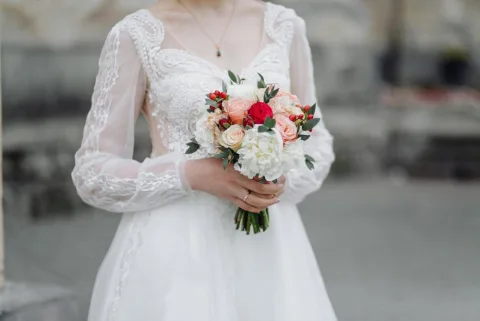
If your dress already shows signs of yellowing, hidden stains, or any of the damages on this list, it's a clear sign preservation can't wait. These damages only deepen over time without proper care.
At Major Cleaners, we specialize in Wedding Dress Cleaning and Preservation Service using our eco-friendly MuseumCare process, designed to gently remove stains while protecting delicate fabrics. As a Certified Wedding Gown Specialist and member of the International Association of Wedding Gown Specialists, we follow trusted methods that keep your dress looking as beautiful as the day you wore it.
Bring in your dress for an assessment before the damage goes further. We'll tell you honestly what can still be done, and we'll take care of it the right way.
📞 Phone: 864-675-9499
📧 Email: info@majorcleaners.com
🕒 Hours:
Monday to Friday: 7:00 AM to 6:00 PM
Saturday: 8:30 AM to 2:00 PM
Sunday: Closed

Designed by Cleaner Marketing | 2026 © Copyright Major Cleaners